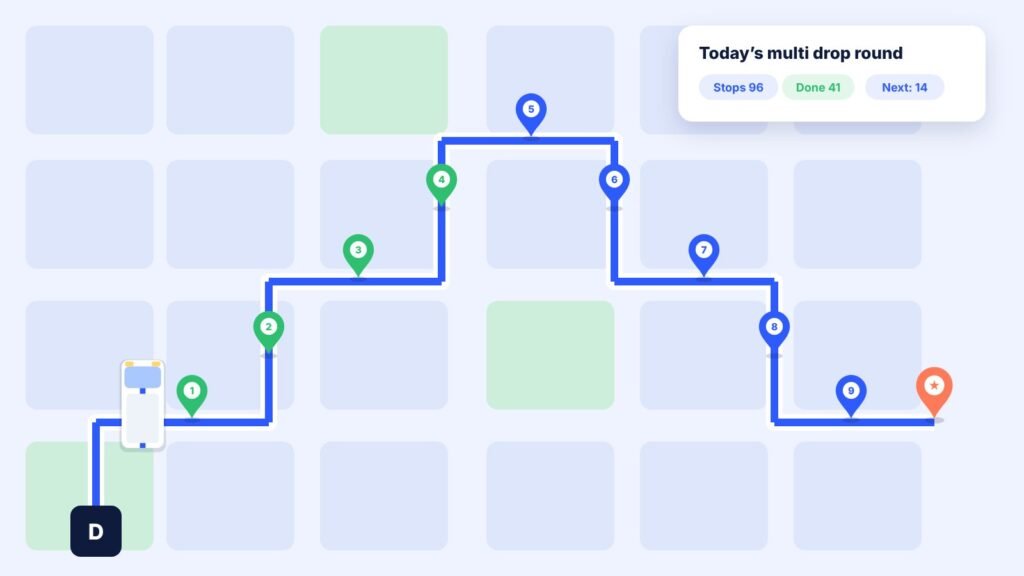
“Multi drop” is one of the most common phrases in UK courier job adverts — and one of the least explained. In this guide we break down what multi drop work involves, who it suits, what you need to apply and how pay usually works, so you can decide if it is the right move for you.
Key takeaways
- Multi drop means delivering many parcels to different addresses in one planned round.
- A typical round runs from early morning loading to mid or late afternoon.
- Most roles are self employed and paid by the day or by the parcel.
- No experience is needed with the right training and support.
What is a multi drop courier?
A multi drop courier delivers lots of smaller items — mostly parcels — to many different addresses in a single shift. It is the opposite of a “same-day” or “single drop” courier, who might carry one urgent item from A to B. Multi drop work is organised around a local depot: parcels are sorted overnight, drivers load their vans in the morning, and each driver works through a planned route.
A typical multi drop day
- Arrive at the depot early in the morning for a short briefing.
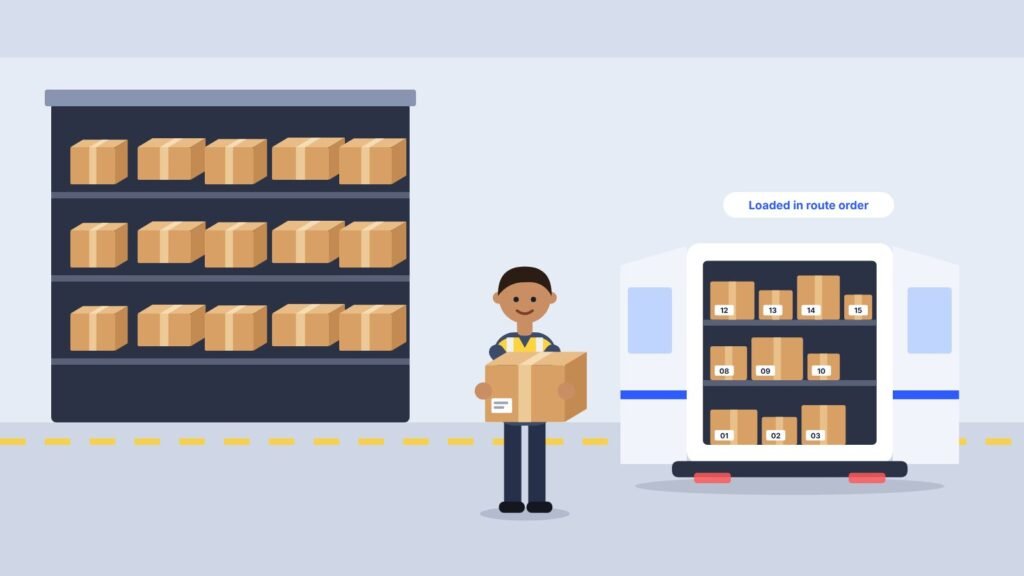
- Load your van in route order so the first deliveries are easiest to reach.
- Scan and check your parcels against the manifest on your handheld device.
- Head out on your round, following the planned sequence of stops.
- Deliver and record each parcel with a scan, photo or signature.
- Handle exceptions — safe places, neighbours or cards for missed deliveries.
- Return to the depot with any undelivered items and collections.
Requirements
- Full UK or EU driving licence
- The right to work in the UK
- A smartphone for delivery and navigation apps
- Good fitness — you will be on your feet and lifting all day
- Reliability and good timekeeping
- For owner-driver roles: a suitable van and courier insurance
How pay works
Multi drop pay is usually set in one of three ways:
- Day rate — a fixed amount for completing a round.
- Per-parcel rate — paid for each successful delivery or collection.
- Weekly or monthly rate — an agreed amount for a regular schedule.
On jobdrivenow.co.uk you will see the pay range and period on every listing. Current rounds range from around £135 to £210 a day, depending on the location and the round. Remember that as a self employed driver your expenses and tax come out of that figure.
Pros and cons
What drivers like
- Independence — no one looking over your shoulder all day
- Early finishes once your drops are done
- Weekly pay and plenty of available work
- A job that keeps you active
What to consider
- Early starts and busy peak seasons
- Weather — you are out in it whatever it does
- Physical work, including stairs and heavy items
- Responsibility for your own tax and records
Rules and changes to know about in 2026
- Making Tax Digital for Income Tax began in April 2026 for sole traders with turnover over £50,000. The threshold will fall in later years.
- Clean air zones continue to expand in UK cities. Check your van’s emissions standard if you drive your own vehicle.
- Right to work checks are carried out for every driver before they start.
How to apply
Browse the latest multi drop jobs, choose a round close to you and apply online in a few minutes. Our recruitment team will be in touch to talk you through the next steps and book your training.
Ready to start driving?
Browse rounds near you and apply online in a few minutes. Questions first? Our recruitment team is happy to help by phone, email or WhatsApp.
Frequently asked questions
How many parcels will I deliver per day?
It depends on the area. Rural rounds have fewer stops and more miles; city rounds have many more stops close together. Your trainer will explain the expected volume for your round.
Is multi drop work full time?
Many drivers work five or six days a week, but you can discuss the days that suit you.
What happens if a customer is not in?
You follow the instructions on your device — usually a safe place, a neighbour or a card — and record what you did.
Will I always do the same round?
Usually yes. Regular rounds help you learn the area and get faster over time.