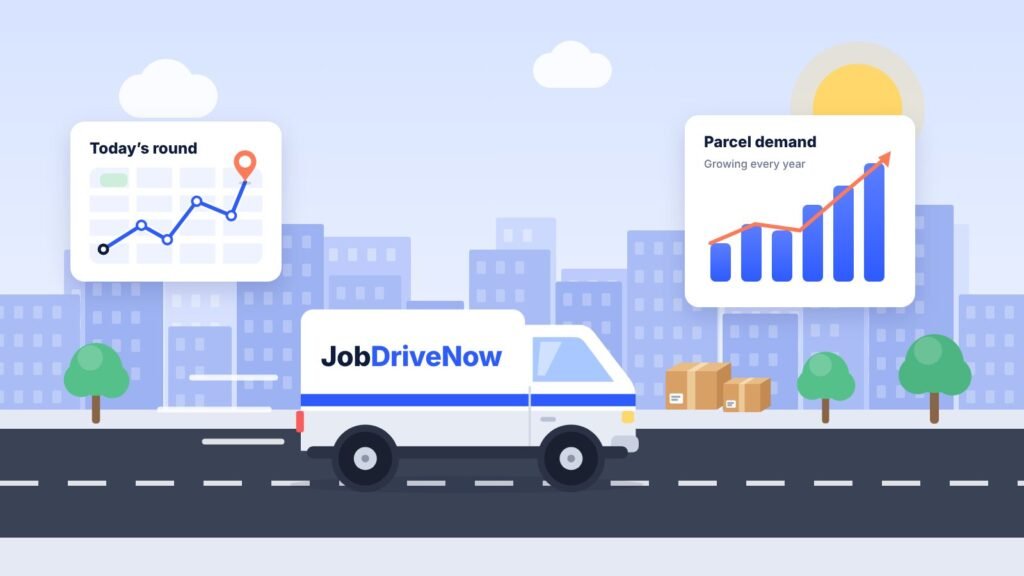
If you have ever thought about driving for a living, there has rarely been a better moment to look seriously at parcel delivery. Online orders, next-day expectations and same-day services have turned last-mile delivery into one of the busiest parts of the UK economy. This guide looks at where the work is, how technology is changing the job, what self employment really means, and how to get started with jobdrivenow.co.uk.
Key takeaways
- Demand for parcel delivery drivers is steady all year and peaks between October and January.
- Route planning apps and handheld scanners now do much of the hard thinking — your job is to drive safely and deliver well.
- Self employment gives you flexibility and weekly pay, but you are responsible for your own tax and records.
- You do not need delivery experience: a full UK driving licence, the right to work in the UK and a good attitude are the starting point.
The state of UK parcel delivery driver jobs in 2026
Parcel volumes in the UK have settled at a level that would have looked extraordinary ten years ago. Shopping habits that accelerated during the pandemic never fully reversed: people still buy groceries, clothes, electronics and everyday essentials online, and they expect them on the doorstep within a day or two.
Why demand stays strong
- E-commerce is now the default. Many households order several parcels a week, and returns add a second wave of collections.
- Next-day and same-day promises. Retailers compete on speed, which means more vans on more rounds, closer to customers.
- Peak season. From Black Friday through Christmas and into the January sales, depots take on extra drivers to handle the surge.
- Business deliveries. Small online sellers, pharmacies and trade suppliers all rely on multi drop networks.
Why the last mile matters
The “last mile” — the final journey from the local depot to the front door — is the most visible part of the whole supply chain. It is also the part customers judge. A parcel can cross the country overnight, but if the final delivery is late, damaged or left in the rain, that is what people remember. That is why good drivers are valued: they are the face of every brand they deliver for.
How technology is changing multi drop delivery
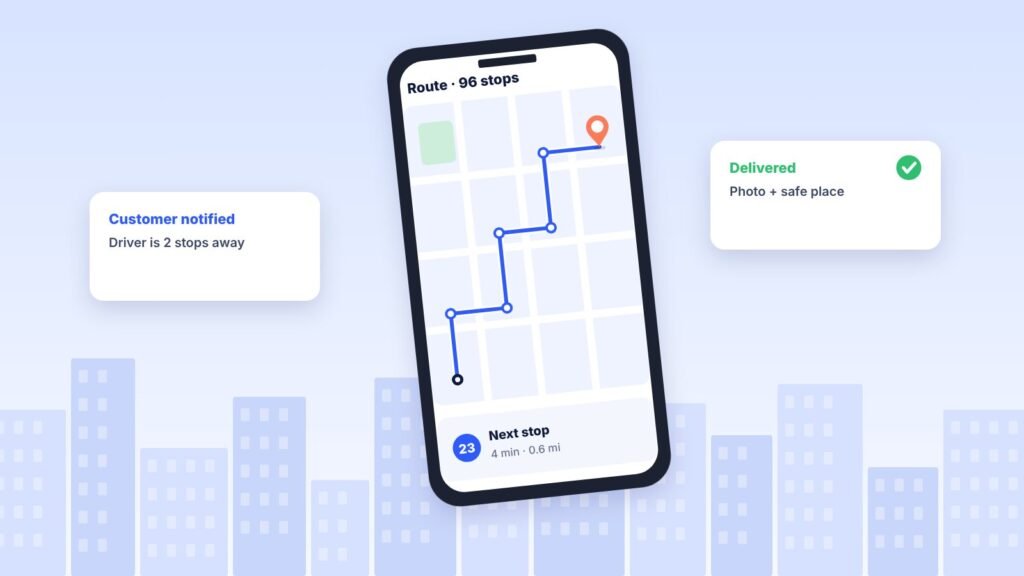
A modern delivery round looks very different from a decade ago. Most of the planning, navigation and proof-of-delivery work now happens on a handheld device or phone.
Route optimisation
Before you leave the depot, your stops are sequenced by software that takes into account postcodes, time windows and traffic. Instead of working out the order yourself, you follow a planned route that is designed to reduce mileage and wasted time. Experienced drivers still add local knowledge — which side of the road to park on, which building has a side entrance — and that is where the real time savings come from.
Digital tools for drivers
- Scanners and apps record every collection and delivery, with photos and signatures where needed.
- Live updates let customers know when you are close, which means fewer failed deliveries.
- Safe-place and neighbour options are recorded digitally, so there is less guesswork at the door.
- Telematics in some vans help you drive more smoothly and use less fuel.
None of this replaces the driver. It removes paperwork so you can focus on safe driving and careful handling.
The self employed delivery driver model
Most multi drop rounds in the UK are offered on a self employed basis. That model has matured over the years, and good partners now offer much more structure and support than the old “gig” image suggests.
Flexibility and stability
Being self employed means you are running your own small business. You agree the work you take on, you are paid for the rounds you complete, and you can plan your weeks around your life. At the same time, a well-organised depot gives you regular routes and predictable volumes, so your income is not a lottery.
The money side
- Weekly pay. jobdrivenow.co.uk drivers are paid every week, which makes budgeting easier.
- Expenses. Fuel, van costs, insurance, phone bills and work clothing can usually be claimed against your profits — keep every receipt.
- Tax and National Insurance. You register with HMRC as self employed and file a Self Assessment return. From April 2026, sole traders with turnover above £50,000 also need to follow Making Tax Digital rules.
- Personal allowance. The first £12,570 of income is normally tax-free, and that allowance is frozen at this level for several years.
If you are new to self employment, read our guide on self employed vs employed delivery work and speak to an accountant for advice on your own situation.
How to get a parcel delivery driver job
What you need to apply
- A full UK or EU driving licence (category B lets you drive vans up to 3.5 tonnes).
- The right to work in the UK, with documents to prove it.
- A smartphone that can run delivery and route apps.
- A good level of fitness — you will be in and out of the van and carrying parcels all day.
- A positive, reliable attitude. Experience is a bonus, not a requirement.
Van, insurance and equipment
Depending on the round, you may use a van provided through the depot or your own vehicle. If you drive your own van it needs to be roadworthy, taxed and MOT’d, and you will need the right insurance — usually hire-and-reward cover, goods in transit and public liability. In cities with clean air zones, such as London’s ULEZ, check that your van meets the emissions standard to avoid daily charges.
Why drive with jobdrivenow.co.uk
We built jobdrivenow.co.uk around one idea: drivers do better work when they are well supported. That means clear rounds, honest pay, real training and a team that picks up the phone.
- Full training on the van, the scanner and the route before your first day.
- Paid every week, with clear statements so you always know where you stand.
- Rounds from depots across the UK, so you can work close to home.
- A recruitment team that answers — by phone, email or WhatsApp.
Drive your career forward
Parcel delivery is not just a stop-gap job. Many drivers go on to run several vans, become route leads or move into depot and operations roles. The skills you build — time management, customer service, careful driving — are valued across the whole logistics industry.
Ready to start driving?
Browse rounds near you and apply online in a few minutes. Questions first? Our recruitment team is happy to help by phone, email or WhatsApp.
Frequently asked questions
Do I need delivery experience?
No. We train every new driver on the van, the handheld scanner and the route before their first round. A full driving licence, the right to work in the UK and a good attitude are what matter most.
How much can a parcel delivery driver earn?
It depends on the round, the location and the number of days you work. Our current listings show typical day rates of around £135 to £210 before expenses. Check each job listing for its pay range.
Do I need my own van?
Not always. Some rounds include a van, others are for owner-drivers. Each job listing explains what is needed.
What does multi drop mean?
A multi drop round is a planned route where you deliver many parcels to different addresses in one shift, usually from a local depot.
How often will I be paid?
jobdrivenow.co.uk drivers are paid every week.
Do I need special insurance?
If you use your own van you will normally need hire-and-reward insurance, goods-in-transit cover and public liability insurance. Our team can explain what is required for each round.
What hours will I work?
Most rounds start early in the morning with loading at the depot. You finish when your deliveries are done, which is often mid to late afternoon.